|
|
- News - |
|
|
|
|
 26 e 27 marzo 2011 26 e 27 marzo 2011
Montepulciano

Nel cuore “nobile” della città poliziana: i rinascimentali palazzi privati, le arcane cantine e le testimonianze di un eroico Risorgimento
Teatro Poliziano
Via del Teatro, 4
Palazzo Contucci e le sue cantine storiche
Via del Teatro, 2
Palazzo Ricci e Cantina del Redi. Sede dell’Accademia Europea di Musica e Arte
Via Ricci, 2
Concerti: domenica 27, ore 12.00 e 16.00
 Trekking risorgimentale Trekking risorgimentale
Muri cittadini raccontati come monumenti importanti e storie di giovani idealisti Poliziani che hanno contributo all’Unità d’Italia
Per questi luoghi apertura Domenica 27, ore 10.00 – 17.30
Visite guidate a cura degli Apprendisti Ciceroni®: I.I.S.S. “A. Poliziano”, Classi VB e C Linguistico; Istituto “Redi-Caselli” Polo Valdichiana, Classi III e IV Professionale Turistico
Palazzo Tarugi
Piazza Grande
Domenica 27, ore 11.00 – 13.45 Ingresso riservato solo agli Iscritti FAI; possibilità di iscriversi in loco
Visite guidate
Eventi collaterali
“In viaggio nell’Unità d’Italia: carrozze, calessi e auto storiche”
Piazza Grande
Domenica 27, ore 11.00 – 17.00
Museo Civico Pinacoteca Crociani:
mostra “Macchiaioli a Montepulciano. Capolavori inediti privati”
Mercato prodotti tipici biologici e tradizionali di filiera corta
“Menù FAI” presso i ristoranti di Montepulciano aderenti all’iniziativa
|
dal 29 aprile 2011 al 1° maggio 2011
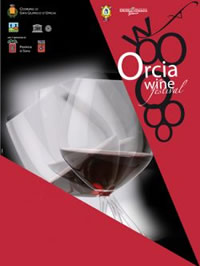
Orcia Wine Festival a San Quirico d'Orcia
L’evento
La mostra-mercato, realizzata in collaborazione con Enoteca Italiana e Onav, Organizzazione Nazionale Assaggiatori di Vino, la sinergia con il Consorzio vino Orcia e le Strade del vino Orcia lascia spazio a degustazioni tecniche guidate, banco d’assaggio di vini e prodotti tipici, oltre alla possibilità per gli eno-turisti che per molti mesi all’anno giungono in Valdorcia, di visitare direttamente le cantine.
Il vino Orcia
Proprio a San Quirico nel ’96 le aziende richiesero l’Indicazione geografica tipica (Igt) per valorizzare le produzioni locali; e nel 2000 per loro arrivò la Doc con la denominazione Orcia. Dieci anni dopo, quindi, nasce l’Orcia Wine Festival - che potrà avvalersi delle collaborazioni di Onav e di Enoteca Italiana del patrocinio del Ministero del Turismo, del Ministero delle Attività Produttive, del Ministero delle Politiche Agricole, della Provincia di Siena e della Regione Toscana –, per permettere ai produttori valdorciani di avere un palcoscenico ideale per la promozione nei confronti dei consumatori. Gli appassionati e i turisti potranno assaggiare e acquistare direttamente dai produttori i vini Orcia oltre che apprezzarne le caratteristiche e la qualità.
Il territorio ospite
Novità di questa edizione 2011 il vino ospite. Ad arrivare in Valdorcia sarà un altro territorio patrimonio mondiale dell’Umanità UNESCO: Matera. Con la sua DOC. Dalla collaborazione tra il Comune di San Quirico d’Orcia e il Consorzio di tutela dei vini Matera DOC una delegazione di produttori materani e di ristoratori sarà ospite a San Quirico per presentare il proprio prodotto di eccellenza e conoscere la DOC Orcia.
Eventi collaterali
A fare da cornice all’evento, oltre alle sale affrescate del Palazzo Chigi, degustazioni tecniche, visite guidate ai tesori paesaggistici della Valdorcia e alle cantine dei produttori.
|
 |
Luglio 2004
La Val d'Orcia nel Patrimonio Mondiale
La Val d'Orcia è stata inserita dall'UNESCO nella lista dei luoghi da tutelare e valorizzare come Patrimonio Mondiale dell'Umanità
Giusticazione di iscrizione
Criterio (iv) : La Val d’Orcia è un riflesso eccezionale della riscrittura del paesaggio durante il Rinascimento che illustra gli ideali di buon governo e la ricerca estetica posta alla base di questa concezione.
Criterio (vi) : Il paesaggio della Val d’Orcia è stato celebrato dai pittori della Scuola Senese, che è fiiorita nel Rinascimento.. Le immagini della val d’Orcia, immagini di un paesaggio ideale dove l'uomo vive in armonia con la natura,, sono deventate delle icone del Rinascimento e hanno avuto un'influenza profonda sullo sviluppo del paesaggismo.
|
 Juillet 2004 Juillet 2004
La Vallée de l'Orcia dans le Patrimoine Mondial
La Vallée de l'Orcia a été inscripte par ll'UNESCO dans la liste des lieux du Patrimoine mondial de l'Umanité
Justification d'inscription
Critère (iv) : La vallée de l’Orcia est un reflet exceptionnel de la réécriture du paysage durant la Renaissance qui illustre les idéaux de bonne gouvernance et la recherche esthétique qui a présidé à sa conception.
Critère (vi) : Le paysage de la vallée de l’Orcia a été célébré par des peintres de l’école de Sienne, qui s’est épanouie à l’époque de la Renaissance. Des images de la vallée de l’Orcia, images d’un paysage idéal où l’homme vit en harmonie avec la nature, sont devenues des icônes de la Renaissance et ont eu une influence profonde sur le développement du paysagisme.
|
 July 2004 July 2004
The Val d'Orcia in the World Heritage
The Committee decided to inscribe the Val d'Orcia on the basis of cultural criteria (iv) and (vi)
Justification for Inscription
Criterion (iv) : The Val d’Orcia is an exceptional reflection of the way the landscape was re-written in Renaissance times to reflect the ideals of good governance and to create an aesthetically pleasing pictures.
Criterion (vi) : The landscape of the Val d’Orcia was celebrated by painters from the Siennese School, which flourished during the Renaissance. Images of the Val d’Orcia, and particularly depictions of landscapes where people are depicted as living in harmony with nature, have come to be seen as icons of the Renaissance and have profoundly influenced the development of landscape thinking.
|
| Un
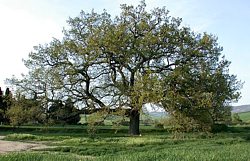
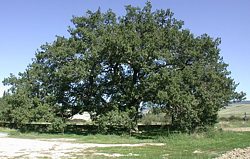
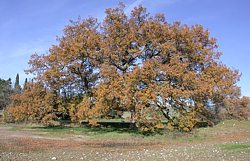
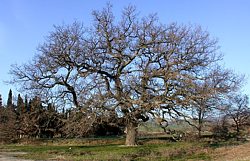
patriarca della natura:Il quercione delle CheccheIl
quercione delle Checche si trova nel comune di Pienza sulla
strada provinciale n. 53 che va da Bagno Vignoni a Radicofani,
attraversando tutta la Val d'Orcia. Questa roverella (Quercus
pubescens Willd), caratterizzata da imponenti rami trasversali,
ha un'età di 360 anni, un'altezza di 20 m, un diametro
di 19 m; il suo tronco ha una circonferenza di 4,65 m. È
uno degli alberi monumentali più noti della Toscana.A
patriarch of nature:The huge oak tree at Le Checche
The
huge oak tree at Le Checche is situated near Pienza along
the provincial road no. 53 which goes from Bagno Vignoni to
Radicofani, across the Val d'Orcia. The oak tree (Quercus
pubescens Willd), is characterized by large, imposing,
cross branches; it is 360 years old, it is 20 mt high, with
a diametre of 19 mt;the girt of the trunk is of 4,65 mt.
|
|
|
|
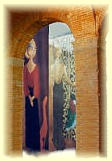
Tazio
Angelini e Fausta Ottolini hanno creato l'Archidoro, luoghi
d'arte, situato nelle logge del XV secolo della cinta muraria
di Cetona.
Visita
Archidoro
Tazio
Angelini e Fausta Ottolini have created "Archidoro", a place
of art located in the XV century open arcade (Loggias) of
the city walls of Cetona.
Visit
Archidoro |
 |
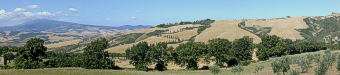 |
Viste
panoramiche della Val d'Orcia riprese da Pienza e La Foce.
Fai clic sull'immagine.Panoramic
views of the landscape of the Orcia Valley. Clic on the picture.
Vues
panoramiques de la Val d'Orcia. Faire clic sur l'image |
|
|
|
| Villages
and Churchs |
|
|
|
|
The
Val
d'Orcia is scattered with villages
and churches built through the centuries starting from
the Medieval times. They are enchanting places, often hidden
in the countryside...
|
|
| Where
could I… |
|
|
|
|
| The
site "the Heart of Tuscany" is a complete guide to the area
situated in the south east of Siena. Here you can find where
to stay and to eat,
infomation about farm-houses,
guest houses
and restaurants
to be able to get the best of your holiday. If you are interested
in spending some time in the area or getting detailed information
about it, follow our directions to come and see us !
|
|
| Shopping |
|
|
|
|
The
typical products of the area wine,
cheese, honey,
olive oil and
salami are produced
with care in the respect of tradition and genuineness. The
local craftsmen produce their wondeful handmade articles following
the traditional
working system passed over from father to son.
|
|
|
|
| Culture
|
|
|
|
|
| The
inhabitants of the Val d'Orcia have tried to mantain the local
culture preserving the many popular festivals and traditions
of the past. Cultural
events and performances are held during the summer in
almost every village. |
|
| Language
Schools |
|
|
|
|
| We
can offer a wide range of opportunities to learn not only
the Italian language but also its customs and traditions,
its cooking , its art and culture.
|
|
| On-line
Museum |
|
|
|
|
| The
"Heart of Toscany" is also a virtual museum showing permanent
exhibitions which you can visit any time without leaving home! |
|
| Welcome |
|
|
|
|
|
Let's
discover together the territory which stretchs to
the South East of Siena and reaches the Mount Amiata
and the rige of the hills which divide Val di Chiana
from Val
d'Orcia.
Within
these territorial boundaries, especially in the valley-bottoms,
the land is clayey and the landscape known as "the
crete" is characterized by barren hillocks, gullies
and landslides and the plants which grow there are
mainly cypresses and brooms.
The area
where the
landscape reveals all its bare and undulated beauty,
is Val d'Orcia. On the ridge of the hills the vegetation
becomes ranker and more varied; we find olive-groves
and vineyards together with woods which change into
chestnuts and beechwoods on the slopes of the Mount
Amiata.
Out of
grapes of these hills they get two of the most appreciated
Italian wines:
Brunello from Montalcino
and Nobile from Montepulciano,
while from the olives an extravirgin oil
is made which ranks among the best in Tuscany.
It
is difficult to express the charm and spell of these
places where cities
of art, medieval
villages, castles
and churches, hills and streams, gullies and fields
contribute to make such a unique and harmonious whole.
This
is a land of old culture and possesses a very rich
artistic heritage, still nowadays the local craftmen
produce their wares according to traditions handed
down for centuries from father to son; famous are
the tiles (cotto senese), the wrought iron, leather
goods and the working of the local stones.
|
|
|
|